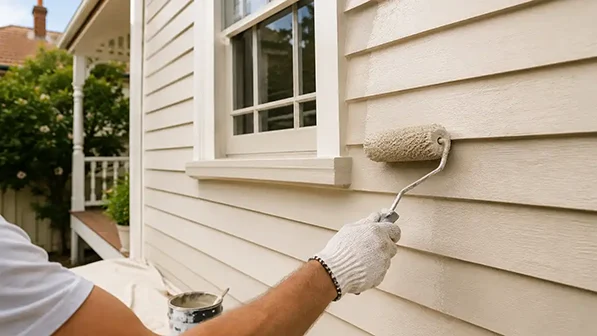
Why weatherboard painting is preparation-intensive
Timber weatherboards are a living material. They respond to Melbourne's variable climate — expanding in heat, contracting in cold, absorbing moisture during wet weather. A paint system applied over poorly prepared timber will crack, lift and peel as the board moves beneath it. Preparation accounts for the majority of time and cost on a weatherboard repaint — more so than virtually any other exterior surface type.
Melbourne's UV index is high by global standards, and the combination of UV exposure, humidity fluctuations and occasional extreme heat events accelerates paint degradation faster than in many temperate climates. Getting the preparation and paint system right is the difference between a paint job that lasts 8–12 years and one that starts failing within three. See our exterior painting page for more on how we approach Melbourne's climate challenges.
Step 1: Assess the existing paint and timber condition
Before any physical prep begins, the full surface needs to be assessed. Walk the entire perimeter and look for:
- Peeling, lifting or flaking paint — often worst on south-facing or moisture-exposed surfaces
- Cracking at joins and board overlaps — a common failure point where boards lap each other
- Soft or rotted timber — probe with a screwdriver; soft spots need timber repair filler or board replacement before painting
- Open gaps and cracked caulk — around window frames, door frames, and where boards meet trim
- Mould or mildew — common on south-facing, shaded or moisture-exposed walls
- Lead paint risk — see our lead paint guide if your home pre-dates 1970
Step 2: Pressure wash the entire surface
All exterior surfaces should be pressure-washed before any scraping or sanding begins. High-pressure water removes decades of dirt, chalking paint residue, mould and cobwebs that would otherwise interfere with paint adhesion. Where mould is present, treat with a diluted bleach solution or proprietary mould wash before pressure washing. Allow the surface to dry completely — typically 24–48 hours — before proceeding.
Melbourne timing tip
Weatherboard painting works best in Melbourne's spring and autumn — above 10°C, below 35°C, and avoiding rain for at least 24–48 hours after application. Avoid painting in direct afternoon sun on hot days; early-morning application on west-facing walls is usually the better approach in summer. See our best time to paint guide for a full seasonal breakdown.
Step 3: Scrape and sand back all flaking paint
Any paint that is loose, lifting or flaking must come off. Painting over it seals failure underneath the new coat and leads to rapid re-peeling. Use a broad scraper for large flaking areas and a narrower scraper for detail areas around window frames and trim profiles. After scraping, sand the scraped edges to create a feathered transition — hard paint edges left un-sanded will telegraph through the new topcoat.
Step 4: Fill cracks, holes and gaps
Weatherboard gaps fall into two categories needing different products:
Flexible filler for movement joints
Joints where boards overlap and where boards meet window and door frames need a flexible, paintable acrylic caulk. Rigid fillers crack as the boards move with temperature changes. Apply with a caulking gun, smooth with a wet finger, and allow to skin before painting.
Solid filler for surface holes
Nail holes, minor rot damage cut back to sound timber, and surface gouges are filled with a two-part wood filler or exterior surface putty. These harden fully and can be sanded smooth before priming.
Step 5: Prime all bare timber and repaired areas
Priming is non-negotiable on bare timber. Primer seals the timber, prevents moisture entry, improves topcoat adhesion, and prevents tannins in some timbers from bleeding through and staining the finish. Use an exterior wood primer matched to the topcoat system — Dulux Weathershield Primer is the standard choice with Dulux topcoat systems.
On homes where timber has been heavily weathered or large areas stripped back, a full coat of primer over the entire surface — not just bare spots — gives a more uniform base and better adhesion for the topcoat.
Step 6: Choose the right paint system
For Melbourne weatherboards, the best-performing systems are water-based acrylic exterior paints formulated for timber. Oil-based paints go brittle over time, making them prone to cracking and difficult to repaint cleanly. Modern acrylics are more flexible and breathable.
Products that consistently perform well on Melbourne weatherboards:
- Dulux Weathershield — formulated for Australian exterior conditions with UV-resistant pigments and mould-inhibiting additives
- Haymes Exterior Roof & Wall — good in high-UV applications
- Taubmans Endure Exterior — their 10-year durability exterior line
As a Dulux Accredited painter, Perfection Coating uses Dulux Weathershield on weatherboard exteriors. The accreditation means we have full access to product technical data and apply to manufacturer specification — which matters for durability and warranty purposes.
Trims, fascias, eaves and doors
These surfaces typically receive a different product from the weatherboards themselves — usually a semi-gloss or gloss enamel, which provides better washability and durability at edges and corners, and creates the visual contrast that defines a house's exterior lines. Trim work is done after the weatherboards are painted, cutting in against a freshly painted weatherboard surface.
For full scope details on what's included in a typical exterior repaint, see our residential painting page.
Weatherboard painting checklist for Melbourne homeowners
- Check for lead paint if your home pre-dates 1970
- Pressure wash before any scraping or sanding begins
- Scrape all loose and flaking paint — don't paint over it
- Use flexible caulk on movement joints and hard filler on holes
- Prime all bare timber before applying topcoats
- Choose a UV-rated exterior acrylic formulated for Australian conditions
- Two topcoats over a primed surface is standard — three if making a major colour change
- Avoid painting above 35°C or below 10°C
Useful links
Connect to our main Melbourne painting services.