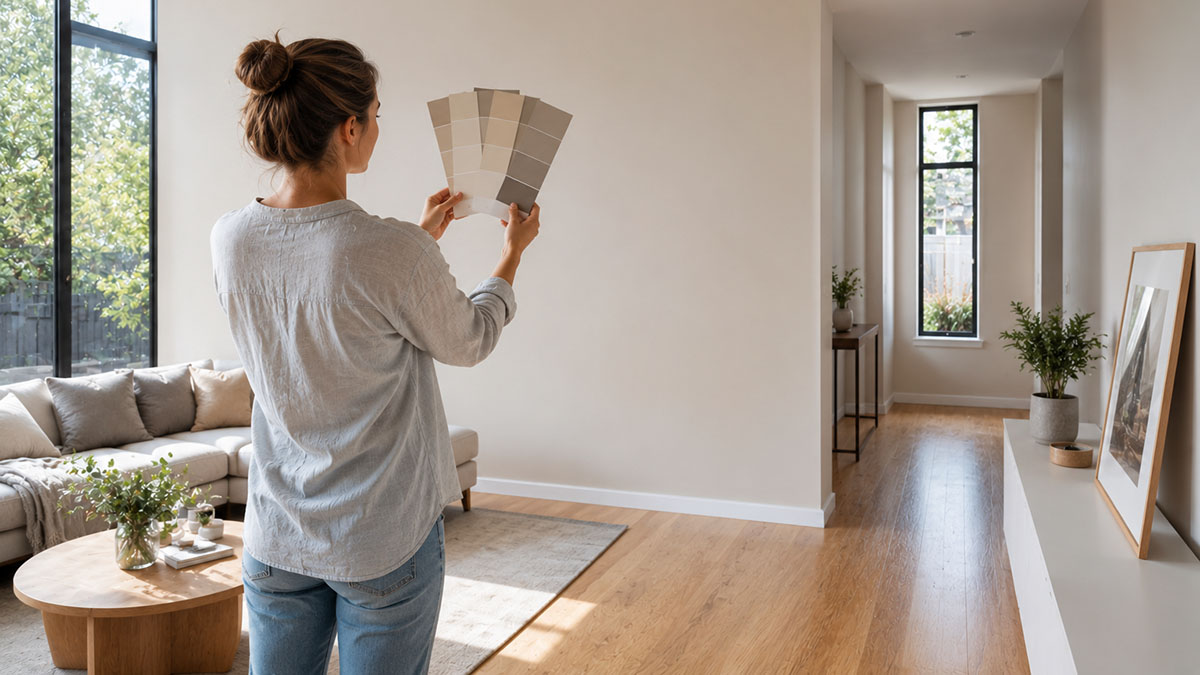
Choosing paint colours is not only about picking a colour you like on a screen. In a Melbourne home, colour changes with natural light, orientation, flooring, furniture, ceiling height, exterior materials and even surrounding greenery.
Perfection Coating helps homeowners think through colour in a practical way before painting begins. The right colour plan can make rooms feel brighter, improve flow and support your long-term plans, whether you are living in the home or preparing it for sale.
Start With Light and Room Orientation
Paint colours look different in morning light, afternoon sun and artificial light. North-facing rooms may handle cooler tones better, while darker rooms can benefit from warmer neutrals. A colour that looks soft in a bright living room may appear flat or grey in a shaded hallway.
Test colours inside the actual room
Use sample pots, large swatches or colour stickers and view them at different times of day. Look at the colour next to flooring, tiles, benchtops, curtains and trims. Do not rely only on a small colour card under store lighting.
How to Choose a Whole-Home Colour Flow
Many Melbourne homes look better when the main wall colour flows through hallways and shared spaces. Bedrooms, studies and feature areas can then use softer variations or deeper accents. Too many unrelated colours can make a home feel smaller and less cohesive.
Think about ceilings and trims
Ceilings and trims are often treated as background details, but they affect the final result. Crisp white trims can sharpen a room, while softer whites can feel warmer and less stark. Doors, skirtings, architraves and window frames should be considered before the painting quote is finalised.
Practical tip
Choose your main wall colour first, then select trim and ceiling whites that work with it. A cool white trim beside a warm wall colour can sometimes look harsher than expected.
Interior colour ideas for Melbourne homes
Warm whites, soft greiges, muted greens, gentle blues and natural neutrals remain popular because they work with timber floors, stone benchtops and modern furnishings. For smaller rooms, lighter colours can help the space feel open, but deeper colours can work beautifully in bedrooms, studies or powder rooms when planned well.
Feature walls
A feature wall can add character, but it should have a reason. Good locations include bedheads, fireplace walls, study nooks and dining zones. Avoid random feature walls that interrupt the flow of the home.
Exterior colour planning
Exterior colours need to work with roof colour, bricks, render, driveway materials, landscaping, fencing and neighbouring homes. Sun exposure can make colours appear lighter outside, while dark colours can absorb heat and show dust or fading more quickly.
For exterior work, test colours on the actual surface where possible. Render, timber and metal can each change how colour appears.
Choosing colours before selling
If you are painting before selling, keep colours broad, clean and market-friendly. Fresh neutral walls, tidy trims and a clean exterior entry often matter more than bold personal colour choices. The goal is to make the home feel cared for and easy for buyers to imagine living in.
Match colour choice to paint finish
Colour and sheen work together. Low sheen walls can hide minor imperfections better than higher sheen finishes, while trims and doors often need a harder-wearing enamel or semi-gloss system. Wet areas may need washable or mould-resistant coatings.
To understand how rooms, trims, doors and preparation affect cost, visit our painting prices Melbourne guide or speak with Perfection Coating through our contact page.
Common colour mistakes to avoid
One common mistake is choosing a colour from a screen and approving it without testing. Phone and computer screens are not reliable for paint selection because brightness and colour settings change what you see. Another mistake is choosing wall colour before considering fixed finishes such as flooring, benchtops, tiles and curtains.
Homeowners also sometimes choose a very bright white expecting the room to feel fresh, but in shaded rooms it can feel cold. In other spaces, a warm white can look creamy beside cooler stone or grey flooring. Testing helps you see these differences before the whole room is painted.
Colour choices for busy family homes
Family homes need colours and finishes that suit real use. Hallways, living rooms and children’s bedrooms often benefit from washable low-sheen products and colours that do not show every mark. Trims and doors need durable finishes because they are touched frequently.
For a full repaint, think about how each room connects visually. A calm main palette with a few carefully chosen accents usually dates less quickly than a different strong colour in every room. This approach can also make future touch-ups easier.
By Perfection Coating | Melbourne Painting Guide