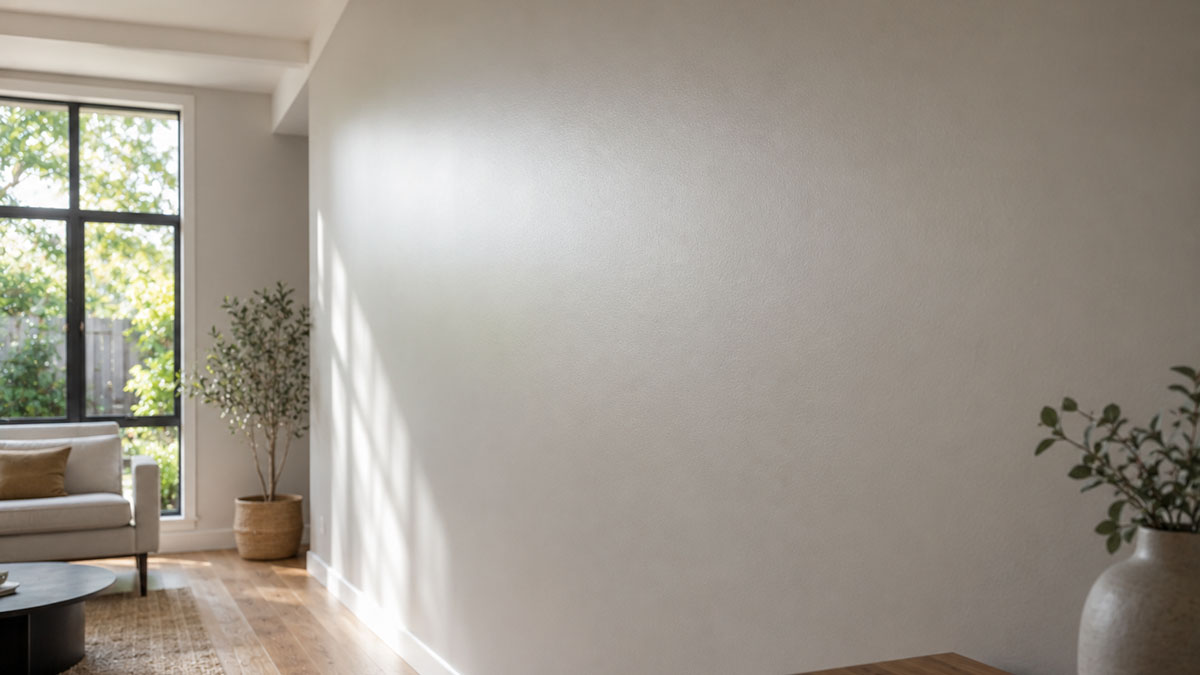
Choosing the right paint finish for interior walls is one of the most common decisions Melbourne homeowners face before repainting. Colour gets most of the attention, but the finish or sheen level affects how the walls look in natural light, how easy they are to clean, and how well the painted surface handles daily wear.
In Melbourne homes, the right finish can vary from room to room. A bright north-facing living area, a hallway with kids and pets, a rental apartment, a bathroom, and a formal bedroom may all need different decisions. This guide explains how to choose between matt, low sheen, satin, semi-gloss and gloss finishes before booking an interior painting project.
What Paint Sheen Means for Interior Walls
Paint finish describes how much light reflects from the painted surface. A flatter finish reflects less light and usually looks softer. A glossier finish reflects more light and usually feels more washable, but it can also highlight surface imperfections if the walls are not prepared properly.
This matters in Melbourne homes because many properties have a mix of older plaster, patched walls, modern plasterboard, renovated extensions and high-use family areas. A finish that looks beautiful in a sample room may behave differently on a long hallway wall with natural side light or on a living room wall that receives afternoon sun.
The main interior wall finishes homeowners usually compare are matt, low sheen, satin and semi-gloss. Gloss is usually reserved for doors, trims and some joinery rather than large wall areas.
Best Finish for Living Rooms and Bedrooms
For most living rooms and bedrooms, low sheen is often the safest and most practical choice. It gives walls a clean, modern appearance while still offering better wipeability than very flat finishes. It suits many Melbourne homes because it balances appearance, maintenance and durability without looking too shiny.
Matt finishes can look elegant in bedrooms, formal lounges and lower-traffic rooms. They soften the wall appearance and can reduce glare, which is helpful in rooms with strong natural light. The trade-off is that some matt finishes can mark more easily and may be less forgiving when cleaned aggressively.
If you have kids, pets or a busy household, ask whether a premium washable matt or durable low sheen product is more suitable. The best choice depends on the brand, room use and wall condition, not just the word printed on the paint tin.
When matt finish works well
Matt finish can be a good option for adult bedrooms, theatre rooms, formal sitting rooms and feature walls where a soft, calm look is the priority. It can also help hide minor surface unevenness better than a glossier finish.
However, matt is not automatically the best option for every wall. In narrow hallways, children’s rooms, stairwells and areas where hands regularly touch the walls, durability and cleaning should be considered before choosing the flattest finish.
When low sheen is the better everyday option
Low sheen is a popular interior wall finish because it suits open-plan living, bedrooms, dining rooms and hallways. It offers a subtle reflection without making the wall look glossy. For many Melbourne homeowners, it is the best all-rounder for a repaint.
Low sheen can also make future maintenance easier. Small marks are usually easier to wipe than with very flat finishes, and the wall surface is less likely to burnish when gently cleaned with the right method.
Painter’s tip
Before choosing a finish, look at the wall in morning, afternoon and evening light. Strong side light can reveal bumps, sanding marks and roller texture. If the wall is imperfect, a very shiny finish may make those defects more obvious.
Choosing paint finishes for kitchens, bathrooms and laundries
Wet and high-humidity rooms need more careful product selection. Kitchens, bathrooms and laundries are exposed to steam, condensation, cooking residue and regular cleaning. In these spaces, durability and moisture resistance usually matter more than achieving a completely flat look.
Satin or specialised kitchen and bathroom paints are often suitable because they provide better resistance to moisture and cleaning. Semi-gloss may be used in some situations, but it can look too reflective on large wall areas and may highlight imperfect plaster.
Ventilation also matters. Even a suitable paint system can struggle if a bathroom has poor airflow, ongoing condensation or mould issues that are not treated before painting. Surface preparation, cleaning and the correct primer are important before applying the finish coats.
Hallways, stairwells and family areas need durability
Hallways and stairwells often show marks faster than other areas. Bags, shoes, hands, furniture, kids and pets can all leave scuffs. For these areas, low sheen or a durable washable interior paint is usually a better choice than standard matt.
In family homes, the best paint finish for interior walls is often the finish that still looks good after real use. A beautiful flat finish can be disappointing if it marks quickly in a busy corridor. A slightly more durable finish may provide a better long-term result even if it has a little more sheen.
For rental properties and pre-sale repainting, low sheen is also practical because it gives a fresh, clean result and suits most buyers. If the goal is to make the home feel brighter and well maintained, the finish should support easy cleaning and a consistent appearance throughout the home.
Trim, doors and skirting boards are different from walls
Interior trims usually need a tougher coating than walls. Skirting boards, doors, architraves and window frames are touched, kicked, cleaned and bumped more often. Satin, semi-gloss or gloss finishes are commonly used for these areas because they provide better durability and a sharper contrast against wall paint.
That does not mean all trims need to be very glossy. Many modern Melbourne homes use satin enamel or water-based trim paints for a cleaner, contemporary look. Older homes with traditional detailing may suit a slightly higher sheen, especially where the trims are a feature.
If you are repainting walls and trims together, choose the trim finish at the same time as the wall finish. The two finishes should work together under the home’s lighting conditions.
How wall condition affects the finish you should choose
Surface preparation has a major impact on how the final finish looks. A glossier coating reflects more light, so sanding marks, old roller texture, filler patches and uneven plaster can stand out. If walls are rough, patched or heavily marked, extra preparation may be needed before using a higher-sheen product.
On the other hand, if the walls are in good condition and the room needs durability, a washable low sheen or satin product can work well. The key is matching the finish to both the room use and the quality of the substrate.
This is why professional painters inspect the surface before recommending a paint system. The best paint finish for interior walls is not only about appearance. It is also about adhesion, cleaning, lighting, traffic and the level of preparation required.
Simple finish guide by room
- Bedrooms: matt or low sheen depending on traffic and cleaning needs.
- Living rooms: low sheen for a balanced, practical finish.
- Hallways: durable low sheen or washable interior paint.
- Kitchens: satin or suitable washable kitchen paint.
- Bathrooms and laundries: moisture-resistant paint system with suitable sheen.
- Doors and trims: satin, semi-gloss or gloss depending on style and durability needs.
Final thoughts on choosing interior paint finish
The best paint finish for interior walls in Melbourne is usually the one that balances appearance, cleaning and room use. For many homes, low sheen is the most practical wall finish, while matt can suit quieter rooms and satin can suit moisture-prone or high-cleaning areas.
If you are unsure, test sample colours in the actual room and ask your painter how the finish will perform under your lighting, traffic and wall condition. For professional help, contact Perfection Coating for advice and a clear interior painting quote.